
Material trails / Edition 01
Follow
the material.
A thread becomes a garment. A woven ground holds an image. Clay gives a room another weight.Three ways into the NOBLE edition, through the things it is made of.
The NOBLE point of view
Look closer.
Then follow
the thread.
A material changes the questions we ask. With cloth, it may be how a surface takes light or how an edge is finished. With a ceramic object, it may be the meeting of lid and rim.
These trails connect our own developing work with sourced objects and the people who make them. Each is an invitation to keep looking.
Begin with cottonCotton / From idea to garment
A quiet statement.
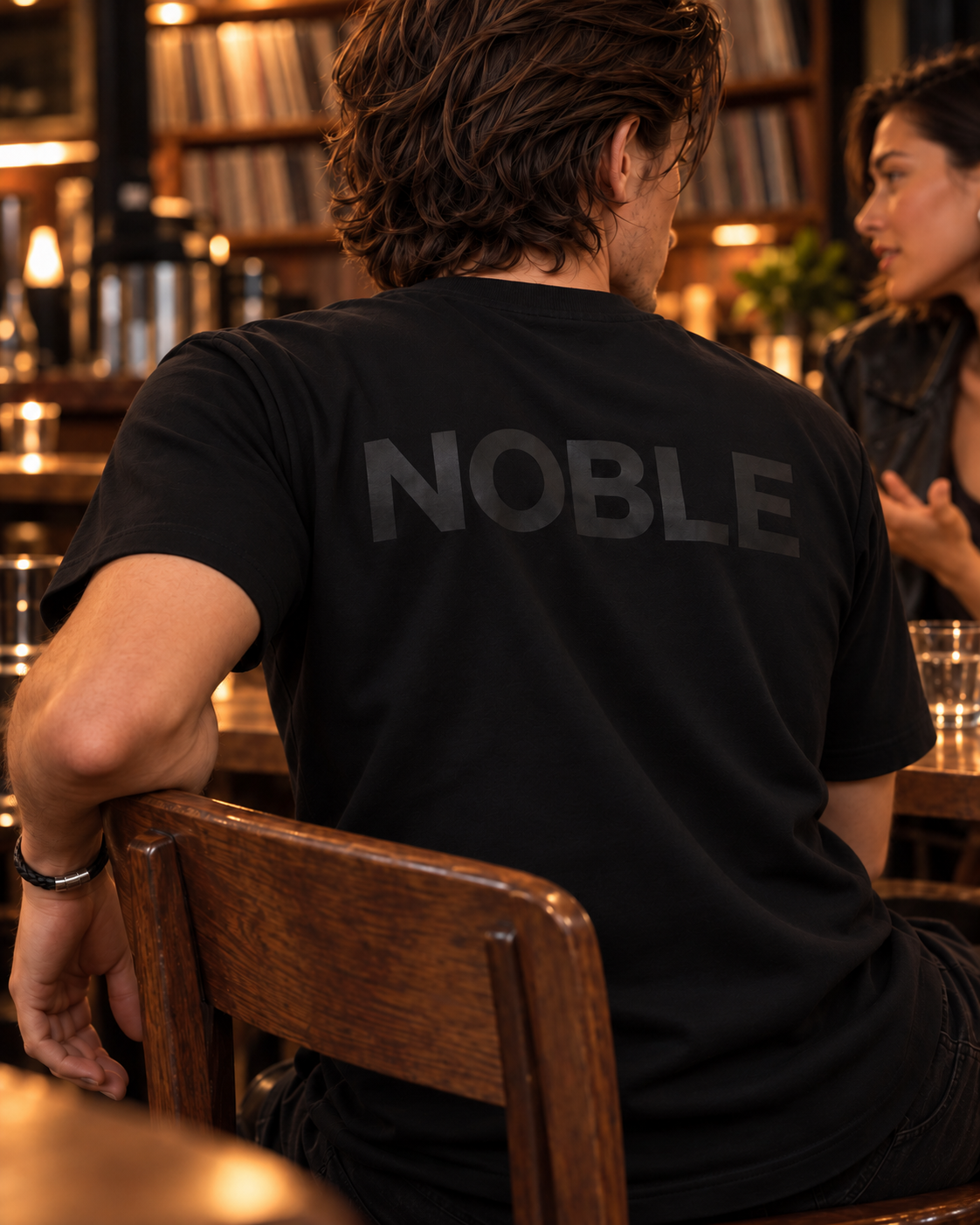
The NOBLE T-shirt begins with the relationship between a black surface and a black wordmark. Fabric, fit and print must eventually make that idea tangible.
- Start with the story
Between records.
A listening room, a conversation and the first SUNNYFY × NOBLE garment concept.
Enter the garment story - Look at the detail
Surface & contrast.
Compare black-on-black with black typography on white. Both are development visuals, with physical fabric and print validation still ahead.
See the two directions - Follow its development
The finished thing.
The garment page holds the current concept and an early-interest enquiry. Sample quality, final specifications and launch timing will determine the next chapter.
View the current garment
NOBLE original product development. The imagery illustrates an intended direction; it does not establish cotton provenance, a physical texture, tested durability or current stock.
Linen / From cloth to image
The ground is part of the work.
In Heath + House Industries’ White and Blue screen print, the image sits on unprimed linen. The support is worth noticing alongside the marks it carries.
- Meet the work
White and Blue.
Heath lists archival inks on natural, unprimed linen canvas, at 24 × 24 inches.
Read the maker’s description - Consider its scale
A room, composed.
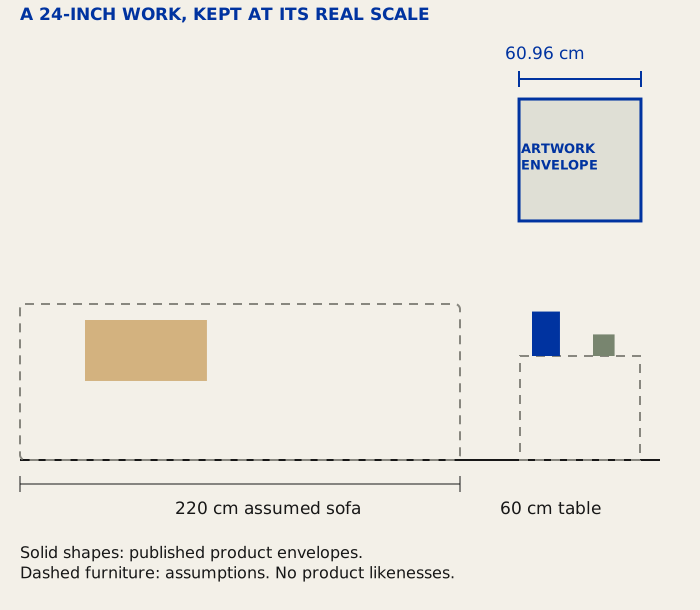
Our Collected Room study keeps that artwork at its real dimensions and considers four companions around it.
Read the room study - Continue the connection
Cloth, used differently.
Compare the role of linen as an image-bearing ground with the throw selected for the same room.
Explore the selection
Material and dimensions: Heath Ceramics’ official product listing, checked 1 November 2026. The room arrangement is NOBLE’s researched design study; it is not a photographed installation or product inspection.
The Collected Room / 01
Give an object
room to speak.
A small artwork, a lamp, a ceramic jar. What changes when their scale and spacing are considered together?
Open the complete studyOriginal dimensional diagram. Shapes show object envelopes and assumed furniture dimensions, not product likenesses.
Clay / From hand to room
The meeting of two edges.
A jar’s lid is a small act of precision. In Heath’s Round Bottom Jar in Tule, the maker describes the contrast between a wiped lid edge and its green glaze.
- Meet the object
A jar in Tule.
Designed by Tung Chiang and made in the Heath Clay Studio in San Francisco, the ceramic jar is part of our room selection.
See the maker’s object - Notice one decision
Lid, rim, glaze.
The studio describes hand-thrown construction and variation between glazes. Consider how the edge changes your reading of the whole.
Read the craft description - Place it in context
One of five.
Return to the Collected Room to see why a ceramic object accompanies linen, a print and a small lamp.
Follow it into the room
Making, design attribution and material: Heath Ceramics’ official listing, checked 1 November 2026. NOBLE has not inspected the object; current availability and terms belong to the maker.
Keep following.
Move from materials into places. Discover an atlas selection, compose a day and keep the encounters you want to return to.